
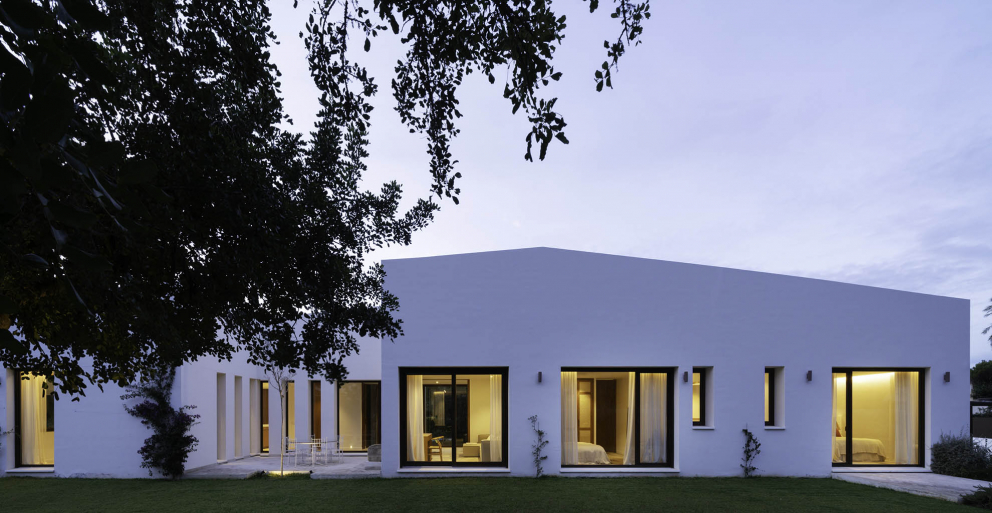
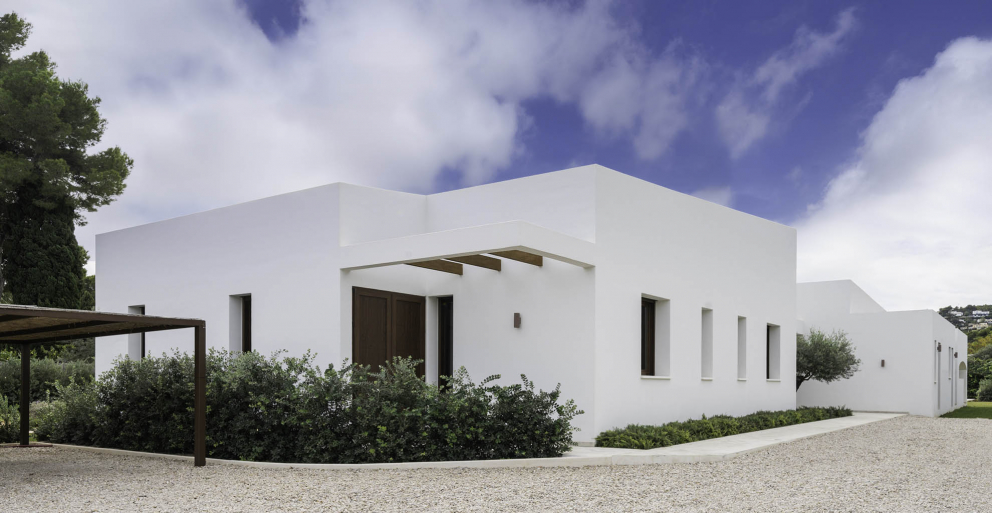
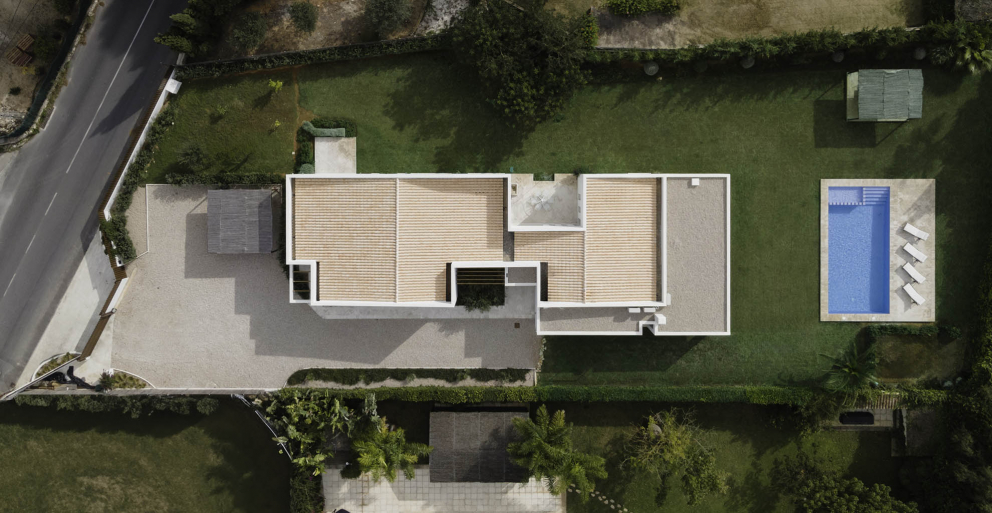
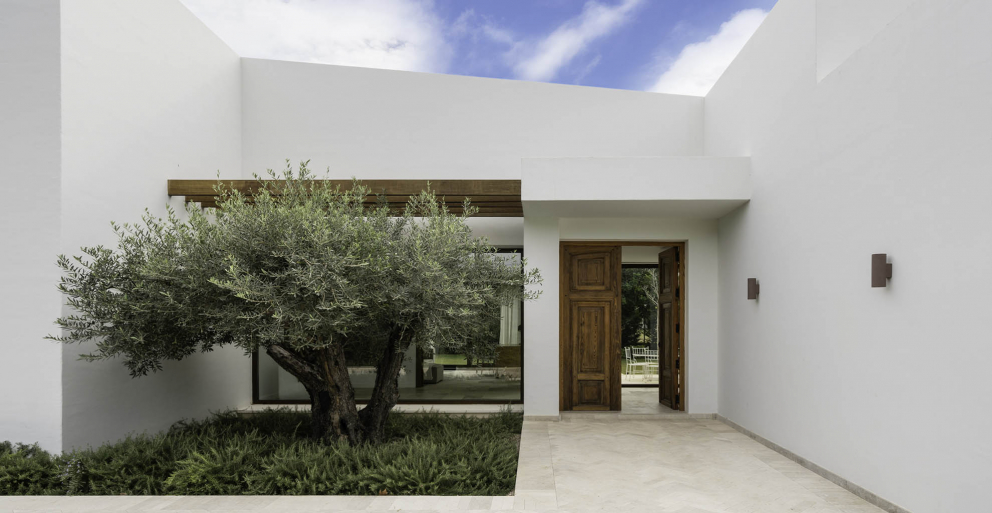
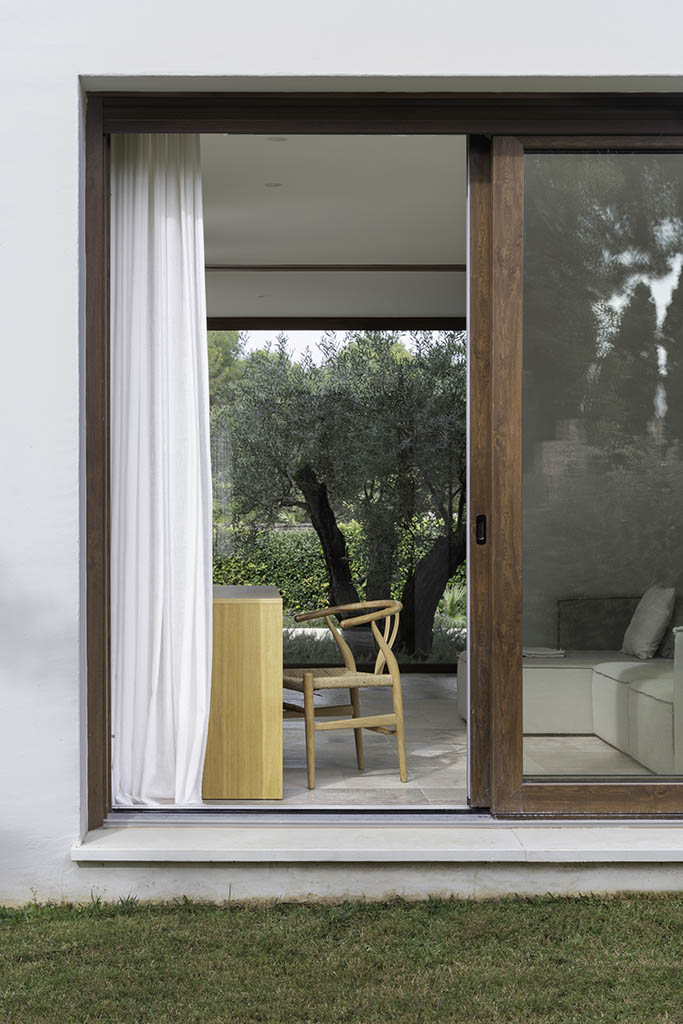
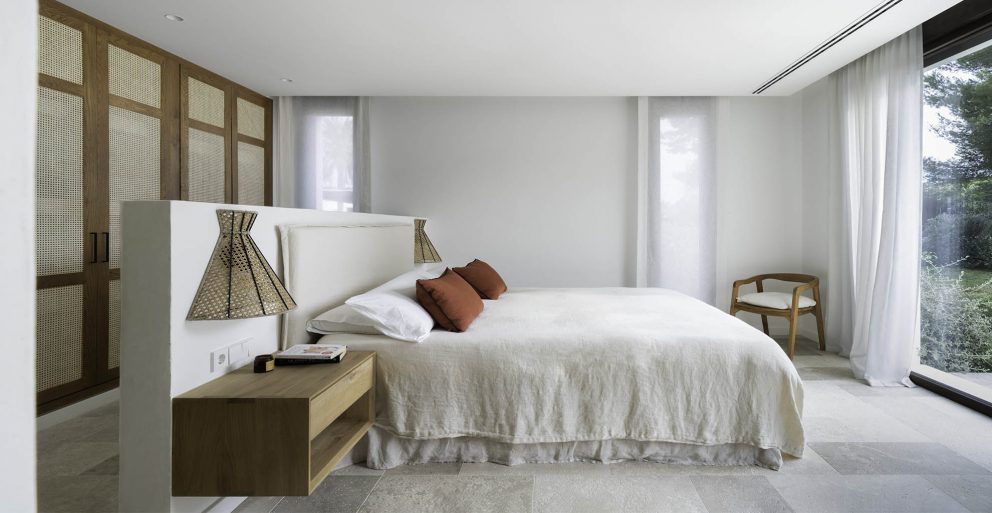
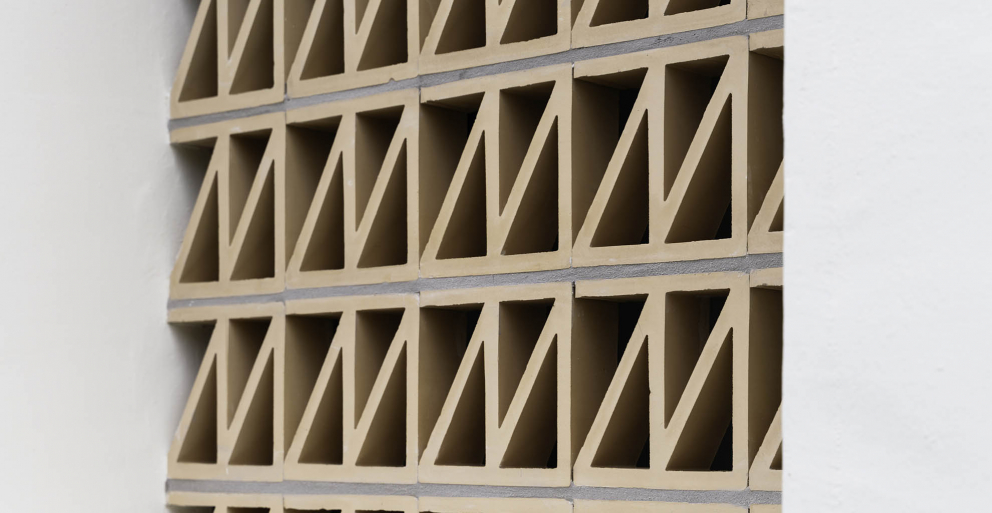
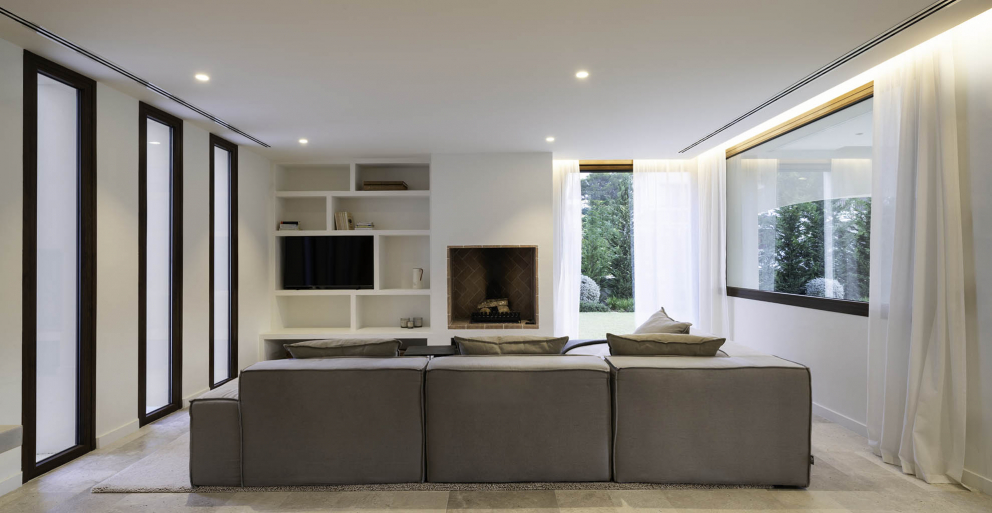
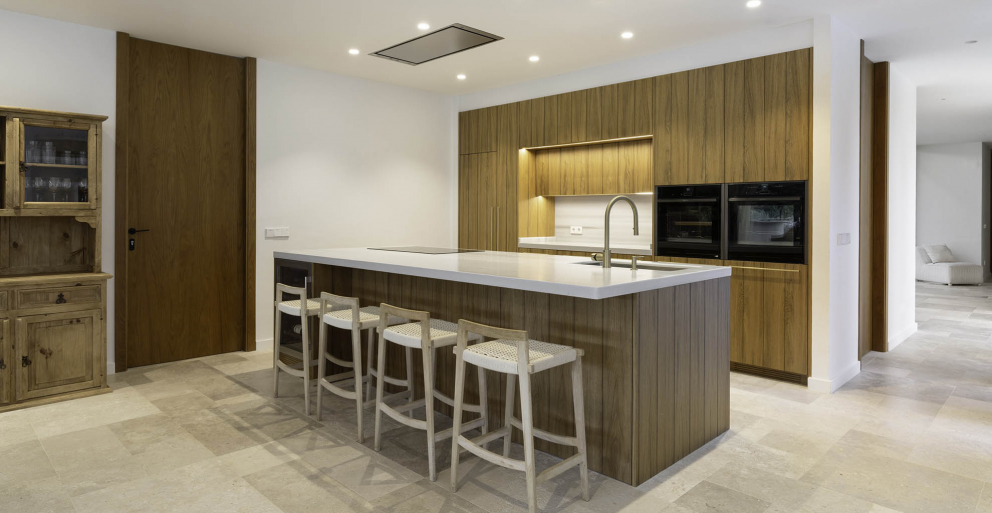
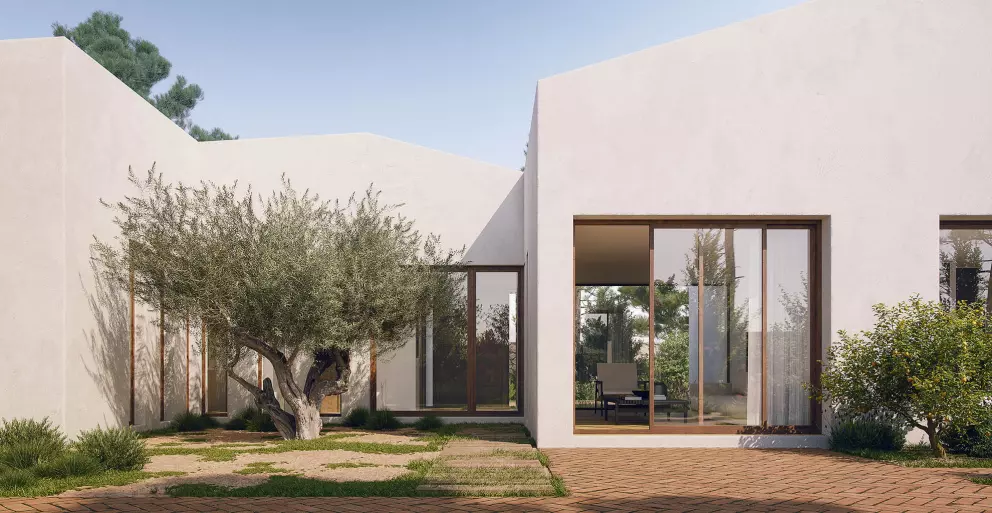
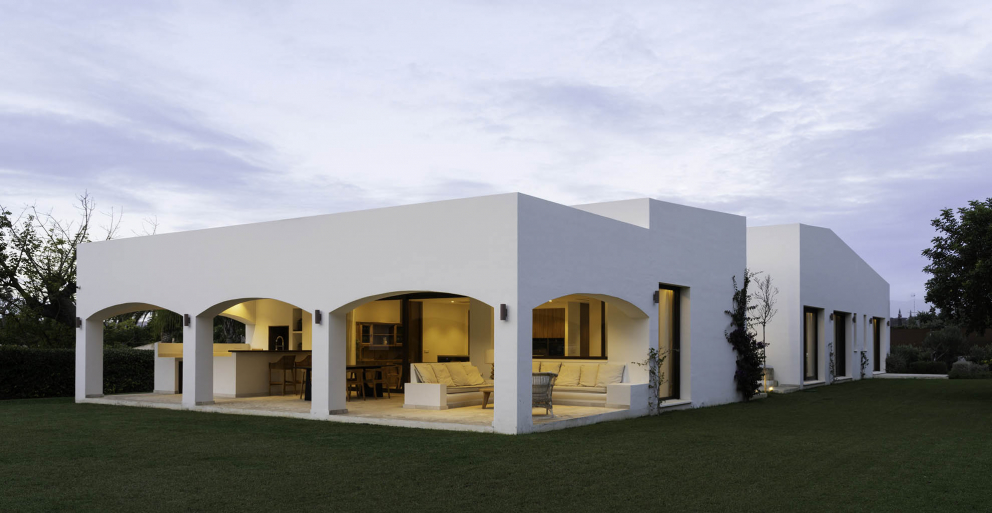
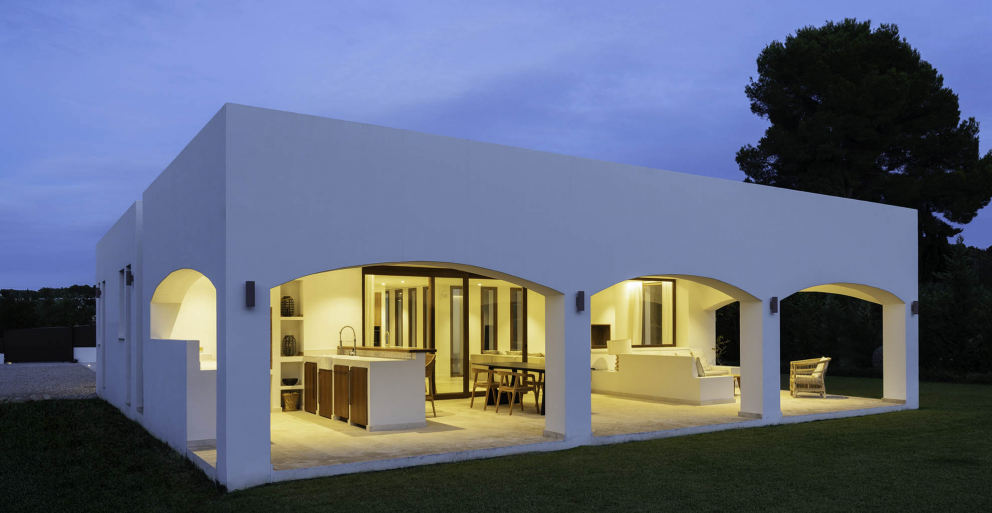
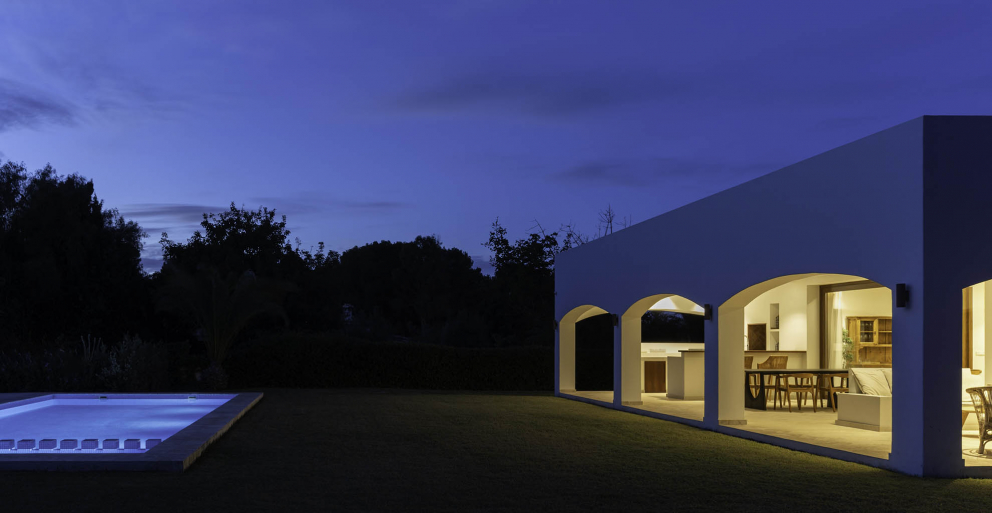
Casa Nathalie offers a profound reflection on residential scale and form. Faced with the challenge of the housing programme, the project proposes a strategy of programmatic fragmentation, which is resolved not by dividing the built volume but by counterbalancing that fragmentation through the compaction of the mass. A sequence of pavilions is thus extruded, modulated and geometrised in close succession, shaping a clean elevation in which the gabled silhouette can be sensed in every space, from the bedrooms to the main living room.
The project dispenses with the conventional enclosed courtyard typology and looks instead to the court houses of Mies van der Rohe. At Casa Nathalie, the courtyard is reinterpreted not as a sealed enclosure but as a diffuse spatial boundary that encircles the main volume, engaging the immediate landscape and rigorously ordering the sequence of interior spaces. This geometric reading makes it possible to capture light and filter privacy from the surroundings without breaking the formal continuity of the whole.
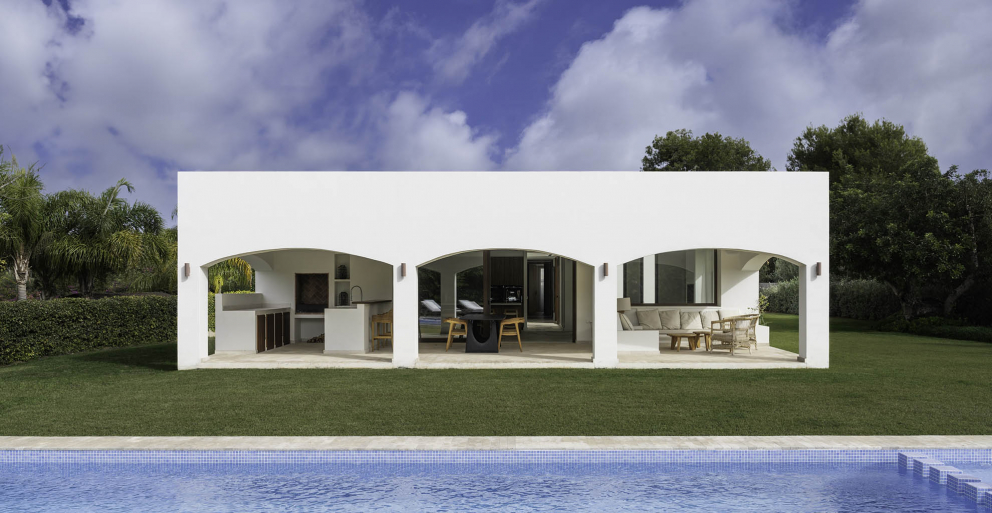
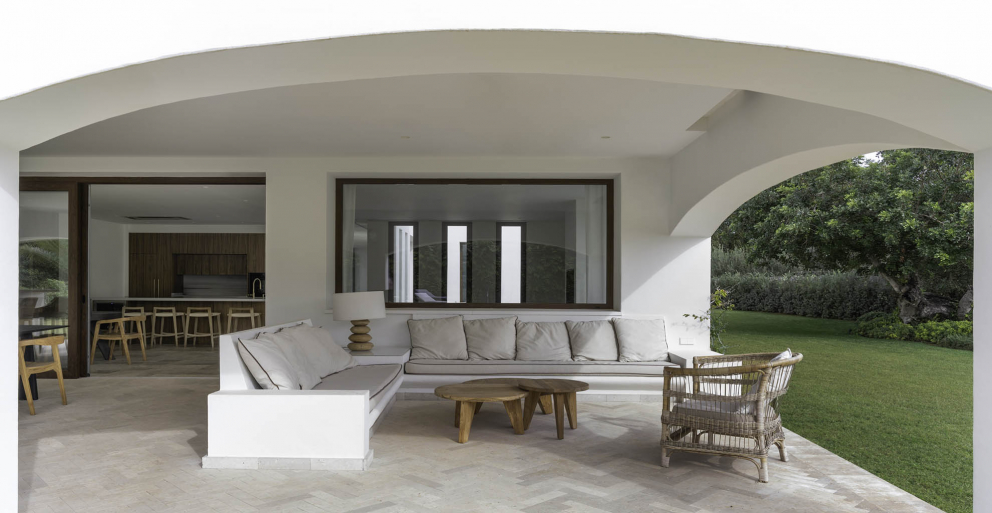
The architectural promenade opens onto the outdoors through a large main porch, conceived as a contemporary reinterpretation of the traditional Mediterranean riu-rau. This key element provides protection from direct sunlight and becomes the true heart of everyday life, where daily activity unfolds in the shelter of the